Visual Art
Writing & Poetry
Uncarcerated: Why we need new crisis response
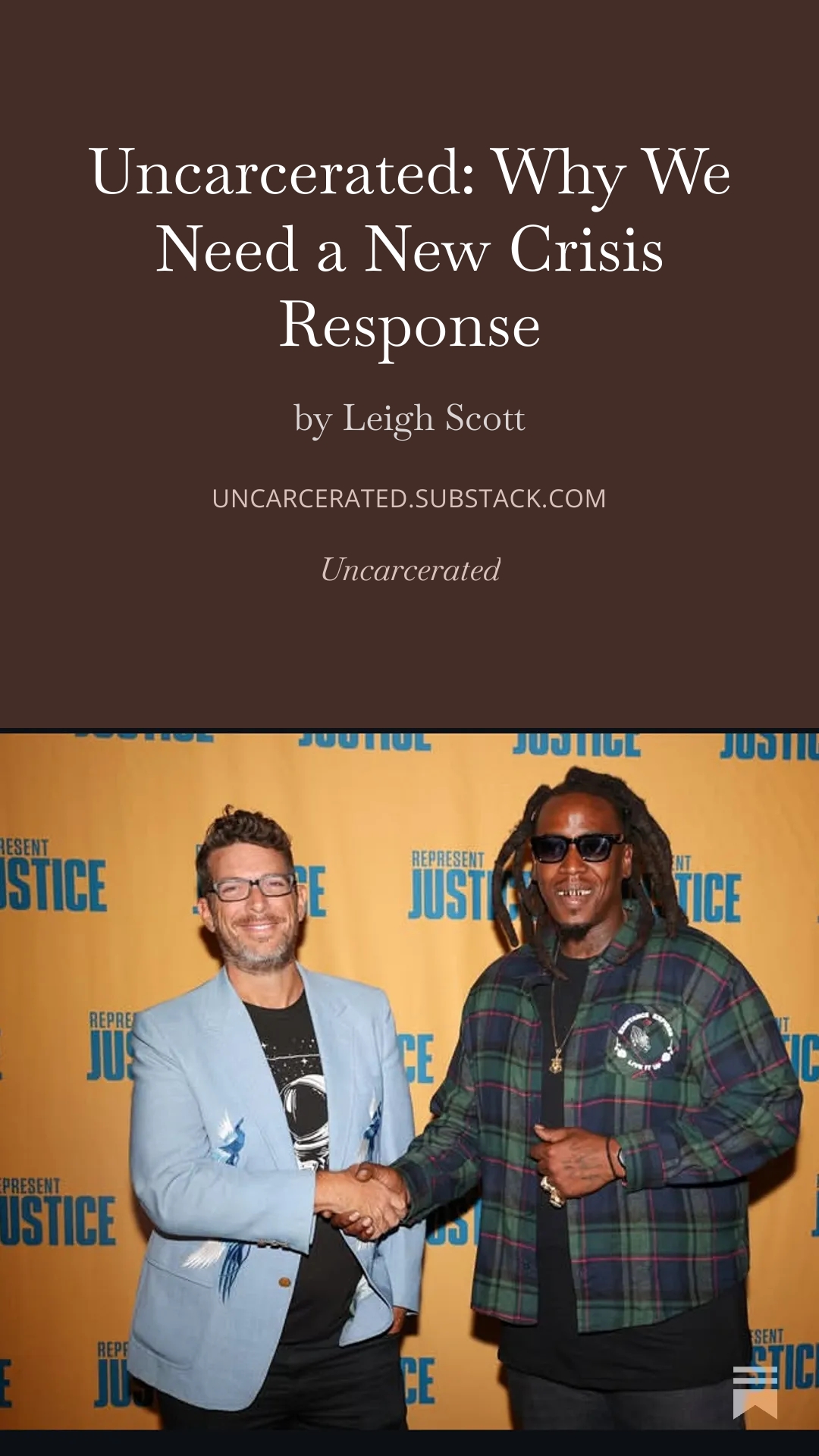
Uncarcerated has been a podcast...until Represent Justice came along and we turned it into a short film about reimagining crisis response to reduce incarceration.
Uncarcerated: Why We Need a New Crisis Response
From personal tragedy to the Uncarcerated premiere.
When the most painful moment of my life arrived—the death of my wife—I didn’t find a system designed to hold me. I didn’t find a safety net. I found handcuffs and 5 years in prison. I came home only to have my daughter pass away and that lit my internal fire to spend my life improving systems for those with similar trauma, mental health, substance use and poverty-crisis.
I was in crisis, and the world’s immediate answer to my trauma, mental health struggle, and grief was the police. That experience is what drives the work I do today, and it is the heartbeat of my project with Represent Justice, Uncarcerated.
The Systemic Failure
We have been conditioned to believe that incarceration is the only solution to instability. Whether it is homelessness, substance use, or a mental health breakdown, our go-to response is to involve law enforcement. We treat crises as crimes, and in doing so, we turn human suffering into a cycle of arrest and release that fixes nothing and costs everyone.
Across the country, we are seeing a trend of increasing criminalization of homelessness. We are throwing tax dollars at the "problem" by funding more jail cells, more trespassing charges, and more court dates. Meanwhile, we are ignoring the reality: police are not social workers. Asking them to act as such is a misuse of their training, a drain on our resources, and, most importantly, a failure to provide the actual help people in crisis need.
The Case for Compassion
We need a robust, 24/7 non-police crisis response. Imagine if a call to 911 or 988 for a mental health or housing crisis meant being connected to mobile outreach clinics, substance use specialists, or housing navigators instead of the justice system.
By shifting our focus toward compassionate, resource-driven intervention at the point of crisis, we can:
Reduce incarceration: Stop the pipeline that traps people in cycles of trauma.
Lower ER visits: Get people the right care in the right place, rather than dumping them in overwhelmed hospital systems.
Respect Taxpayer Dollars: Focus on long-term stabilization rather than expensive, ineffective punitive measures.
Stories Into Action
This past year as a Represent Justice Ambassador has been a masterclass in how media can turn stories into systemic change. Advocacy isn’t just about policy; it’s about shifting the narrative so that society demands better.
That is why I am so proud to share that Uncarcerated—my documentary film—will premiere on July 23 at the Directors Guild Theater in Los Angeles.
This film is more than just a project; it is an invitation to look at the "masks" we force people to wear when they are struggling and to realize that true healing and liberation require us to dismantle the systems that keep us trapped in fear and control.
I hope you’ll join me on this journey. Whether you listen to the Uncarcerated podcast or attend the premiere, the goal remains the same: we aren't just telling stories. We are building the demand for a system that actually serves our neighbors.
See you at the premiere.
From personal tragedy to the Uncarcerated premiere.
When the most painful moment of my life arrived—the death of my wife—I didn’t find a system designed to hold me. I didn’t find a safety net. I found handcuffs and 5 years in prison. I came home only to have my daughter pass away and that lit my internal fire to spend my life improving systems for those with similar trauma, mental health, substance use and poverty-crisis.
I was in crisis, and the world’s immediate answer to my trauma, mental health struggle, and grief was the police. That experience is what drives the work I do today, and it is the heartbeat of my project with Represent Justice, Uncarcerated.
The Systemic Failure
We have been conditioned to believe that incarceration is the only solution to instability. Whether it is homelessness, substance use, or a mental health breakdown, our go-to response is to involve law enforcement. We treat crises as crimes, and in doing so, we turn human suffering into a cycle of arrest and release that fixes nothing and costs everyone.
Across the country, we are seeing a trend of increasing criminalization of homelessness. We are throwing tax dollars at the "problem" by funding more jail cells, more trespassing charges, and more court dates. Meanwhile, we are ignoring the reality: police are not social workers. Asking them to act as such is a misuse of their training, a drain on our resources, and, most importantly, a failure to provide the actual help people in crisis need.
The Case for Compassion
We need a robust, 24/7 non-police crisis response. Imagine if a call to 911 or 988 for a mental health or housing crisis meant being connected to mobile outreach clinics, substance use specialists, or housing navigators instead of the justice system.
By shifting our focus toward compassionate, resource-driven intervention at the point of crisis, we can:
Reduce incarceration: Stop the pipeline that traps people in cycles of trauma.
Lower ER visits: Get people the right care in the right place, rather than dumping them in overwhelmed hospital systems.
Respect Taxpayer Dollars: Focus on long-term stabilization rather than expensive, ineffective punitive measures.
Stories Into Action
This past year as a Represent Justice Ambassador has been a masterclass in how media can turn stories into systemic change. Advocacy isn’t just about policy; it’s about shifting the narrative so that society demands better.
That is why I am so proud to share that Uncarcerated—my documentary film—will premiere on July 23 at the Directors Guild Theater in Los Angeles.
This film is more than just a project; it is an invitation to look at the "masks" we force people to wear when they are struggling and to realize that true healing and liberation require us to dismantle the systems that keep us trapped in fear and control.
I hope you’ll join me on this journey. Whether you listen to the Uncarcerated podcast or attend the premiere, the goal remains the same: we aren't just telling stories. We are building the demand for a system that actually serves our neighbors.
See you at the premiere.